App UI and UX
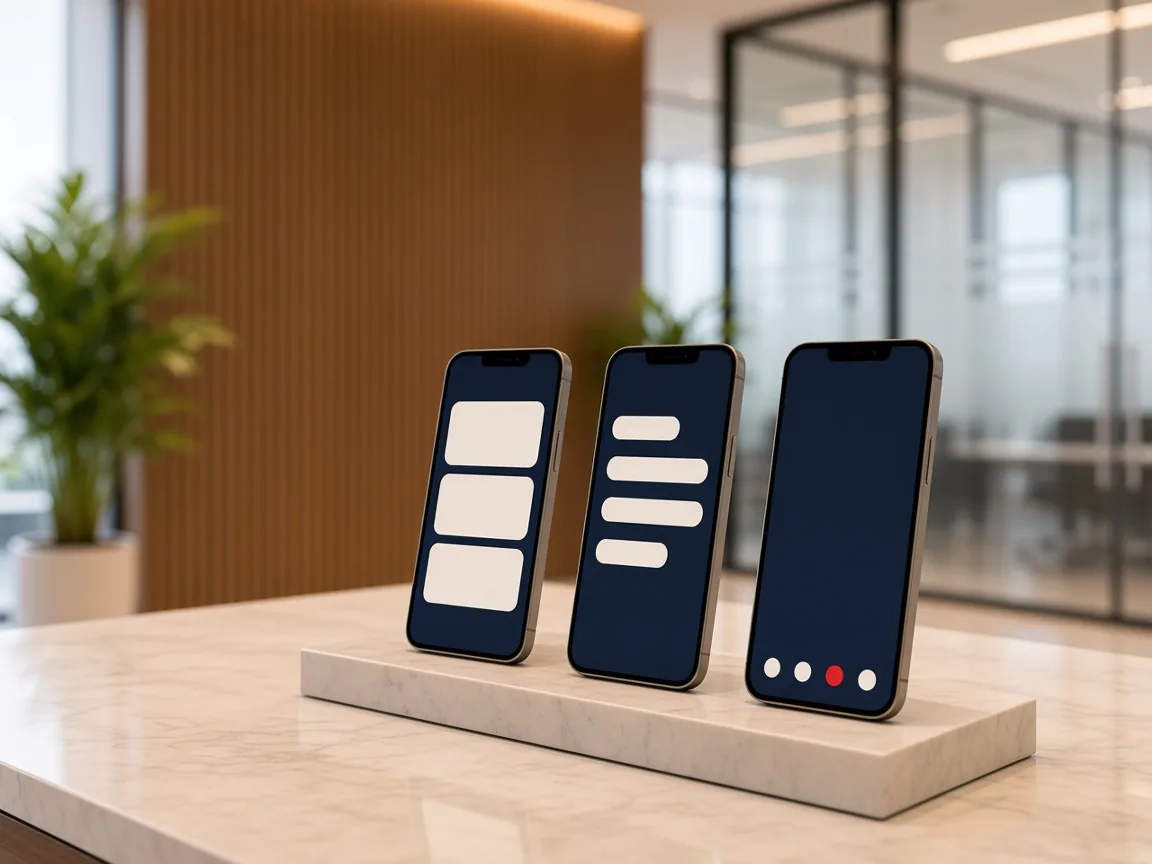
Screens planned for thumbs, short sessions and the one task the app exists to finish.

Mobile app development
Business apps for customers or staff, built when a website cannot hold the job people do on a phone.
The work
A mobile app development company in Hyderabad is easy to hire and easy to over-scope. Bhavi Digital starts with the job the app replaces: a field visit, a customer booking, an internal approval, or a thread of messages that keeps getting lost. If a responsive website already does that job, we say so. The website is often the right first build.
When an app is the right tool, the work covers customer apps and internal business apps. Android and iOS are both in scope. Many projects are one cross-platform build, often with React Native, so you are not paying for two codebases on day one. Native work is scoped when the phone hardware or the store rules require it.
A usable first version includes the screens people open, a login that matches how the business already identifies them, and a connection to the data the office already keeps. Push notifications, an admin panel and later maintenance are part of the plan, not a surprise after the store listing. If the real need is a lead desk rather than an app, that belongs with custom software.
Capabilities
Screens planned for thumbs, short sessions and the one task the app exists to finish.
Android, iOS, or one cross-platform build when two native codebases are not justified yet.
The app talks to the system that already holds customers, orders or jobs.
Logins and roles that match how staff and customers are already identified.
Alerts for the events people need, not a stream they will switch off.
A desk-side view so the office can manage what the app collects.
Payments, maps, WhatsApp or the other services the workflow already uses.
The main flows checked on real phone sizes before a store submission.
Store listings and the release steps agreed before the build starts.
Updates after launch, when the phone platforms or the business process change.
The brief
An app is worth building when one of these is already costing time. It is not worth building as a logo on a home screen.
Jobs, visits or approvals live in a file that is out of date by the afternoon.
The website form is too long, or the task needs the phone itself.
Orders and updates sit in chats that nobody can search later.
The field and the office do not see the same status.
Logins, roles or offline steps do not fit a public marketing site.
The first version tried to do everything and the useful part got buried.
How it runs
We sit with the task: who opens the app, how often, and what “done” looks like.
The first version is the smallest set of screens that replaces the current workaround.
Flows for the phone, plus the admin view the office will actually use.
The app, the API connection and the login. Cross-platform unless native is required.
The main paths on phone sizes, including a failed network and a wrong login.
Store submission, a handover, and a plan for the fixes that show up after people use it.
Tools
We name the tools that fit this work. A brochure website does not need this stack.
How the phone build is usually made.
The API and admin side.
What the app is often joined to.
The studio
App work still follows the same studio habits: a clear job, a phone-first layout, and support after the first release.
The brief starts with what the business needs to happen, not a shopping list of features.
Screens are planned around the person who has to use them, on a phone as well as a desk.
Pages are structured so people and search engines can find the offer. Rankings are not promised.
The work is checked on a phone, not only on a wide monitor.
The tool is picked for the job. A marketing site does not get the same stack as a custom application.
Fewer unused extras, so the page or app can load on an ordinary connection.
The studio that ships the work can stay for hosting, email and the next change.
When a template cannot hold the workflow, the work can move into a custom build.
Portfolio
A named app case study is not published yet. The card below is the kind of work, not a finished client story.
Mobile apps
Internal tools and customer apps, with an admin side. A named project is added when it is ready to publish.
Work type. A named case study has not been published.
View All ProjectsAnswers
Yes. Many business apps are released for Android first because that is the phone the team or the customer already uses. iOS can be in the same first release when both audiences matter.
Yes, when the audience is on iPhone. If both stores are required, we usually start with one cross-platform codebase rather than two separate native projects.
Often, yes. It is a practical way to ship Android and iOS together. Native work is scoped when the phone hardware or the store rules need it.
A narrow internal tool is shorter than a customer app with payments and roles. We estimate after the first-version screen list is agreed. A date before that list is a guess.
Yes. Phone platforms change, and the first month of real use usually shows a screen that needs to be simpler. Maintenance is quoted with the build, not added as an emergency later.
Yes, when the business does not already have one. If a system already holds the data, we connect to it instead of copying it into a second database.
We prepare the release and walk through the store submission. The developer accounts should stay in the business name, so you are not locked to the studio.
When people only need to read, enquire or buy, and they do not need a login, a notification or the phone’s hardware. We will say that before an app is scoped.
Yes. Reviews happen on a call, and test builds can be installed without a trip to Hyderabad. Store accounts should still be in your company name, wherever the company is registered.
Day-to-day content that belongs in an admin panel is built so your team can change it. A new feature is a separate piece of work, quoted before it starts.
Also from the studio
Let's Build
Something Great
Have a website, app, ecommerce store, marketing campaign or business system in mind? Tell us what you are trying to achieve and we will help you work out the right digital approach.